Classification and Selection Guide for Nylon Cable Ties

Nylon cable ties, also known as zip ties, are the most common fasteners for cable bundling and fixing. They can be divided by structure and function into self-locking cable ties, releasable cable ties, marker cable ties, low-temperature resistant cable ties, UV-resistant outdoor cable ties, color-coded cable ties and more. In terms of materials, they are mainly made of Nylon 66, while stainless steel cable ties are available for special working conditions.
Standard self-locking cable ties are manufactured from UL-certified Nylon 66 with flame rating 94V-2 and stable insulation performance. Low-temperature resistant versions are modified to avoid cracking in cold environments. UV-resistant cable ties contain anti-UV additives for long-term outdoor sun exposure. Colored cable ties are widely used for cable identification and easy maintenance. Cable ties of different widths and lengths come with different tensile strengths. You should select products according to bundle diameter, load requirement and service environment.
For new energy, automotive wiring harnesses, electrical control equipment, wind power, energy storage, chemical industry and ship supporting projects, modified special nylon cable ties are preferred for better temperature resistance, anti-aging and anti-corrosion performance. Ordinary white self-locking cable ties are sufficient for indoor home appliances, lamps and weak-current wiring. Proper selection of nylon cable ties helps keep wiring tidy and reduces risks caused by aging and cracking, making them essential basic accessories for wiring harness systems.
Learn the common types and key selection points of **nylon cable ties**, including regular, releasable, UV-resistant and low-temperature resistant models, suitable for electronics, wind power, energy storage and automotive wiring harness.
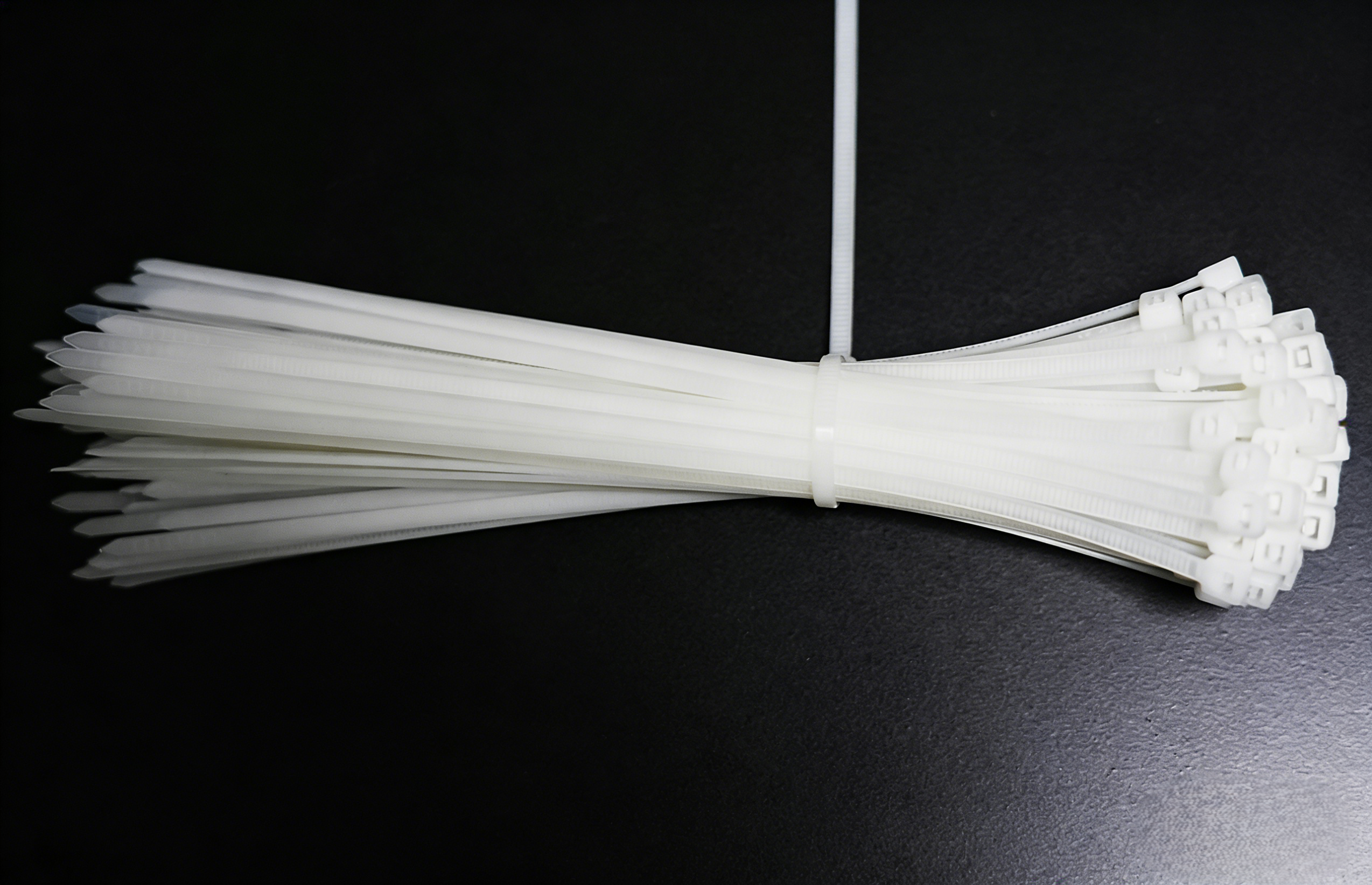
Introduction to **cable ties**, including material, flame rating, temperature range, main features and wide application scenarios in electronics, automotive, ship and agriculture.