Features and Uses of Cable Ties
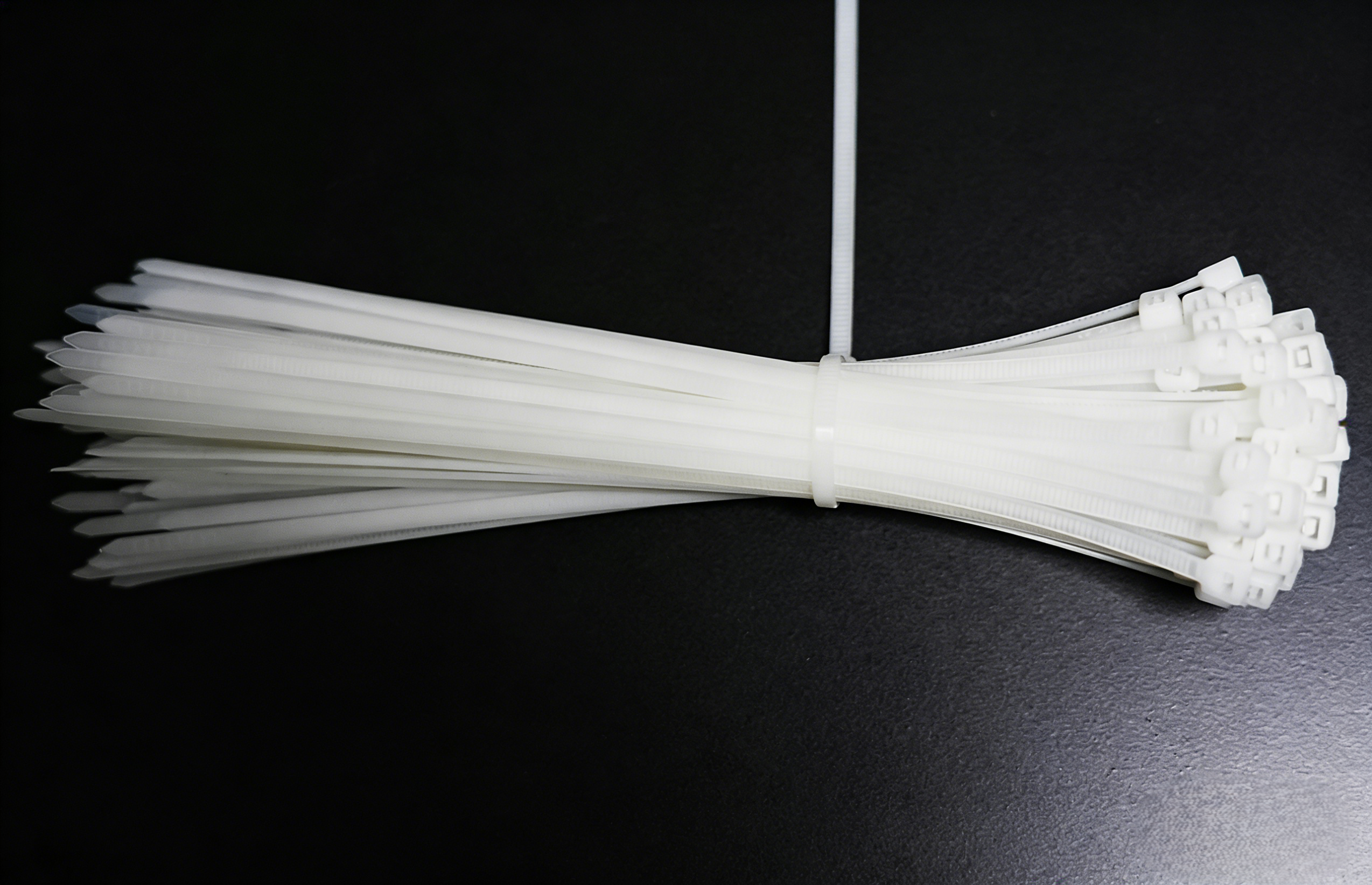
able ties, as the name implies, are straps used for bundling objects. They are equipped with a self-locking ratchet structure that tightens continuously. Releasable types are also available. Cable ties are divided into metal cable ties (generally stainless steel) and plastic cable ties (usually nylon). They are widely used for cables in electromechanical equipment, computers, electronic products, automotive wiring harnesses and more. Also known as nylon cable ties or zip ties, they include standard nylon cable ties, self-locking nylon cable ties, marker cable ties, etc. Made of UL-approved Nylon 66, the cable tie has a flame retardant rating of 94V-2. It is acid-resistant, corrosion-resistant, well-insulated, anti-aging and high in tensile strength. Its operating temperature ranges from -40℃ to 90℃.
Cable ties enable fast bundling, good insulation, firm self-locking and easy operation. They are widely used in electronics factories to secure internal connecting wires of televisions, computers, lighting, motors, electronic toys and other products. They can fix oil pipelines of mechanical equipment, cable wiring on ships, pack complete bicycles and bundle other items. They are also used for bundling in agriculture, gardening, handicrafts and other fields.

Learn the common types and key selection points of **nylon cable ties**, including regular, releasable, UV-resistant and low-temperature resistant models, suitable for electronics, wind power, energy storage and automotive wiring harness.
Introduction to **cable ties**, including material, flame rating, temperature range, main features and wide application scenarios in electronics, automotive, ship and agriculture.